
Have you ever heard of some of the strangest superstitions that people really believe in? Although superstitions don’t have much space in post-modern society, at least not in the typical sense. For much of history, superstitions have played a huge role in shaping cultures and societies. Some of these include old wives’ tales, urban legends, or even scary stories. Each group has its share of them. So if you’re ready to learn about some of the wildest superstitions, check out these strange superstitions from around the world.
Let’s face it: some more and some less, we are all superstitious. It is our irrational and primitive side that emerges, sometimes in a really funny and crazy way. Someone is faithful to “old and dear superstitions” such as not going under a ladder, dreading Friday the 17th or breaking a mirror; others let themselves be influenced by new urban legends. But country you go, superstition you find. Are you curious to know which are the strangest in the world? If the answer is yes, read on.
The strangest superstitions from different countries
All countries have their own superstitions, tarot reading, astrology, some more ingrained than others. Here are the most “crazy” in which you can come across. If you are a real traveler and intend to reach an unknown country, outside your national borders, you will have to immerse yourself in the culture of the place, letting yourself be intrigued by local superstitions as well. These are widespread almost everywhere, even turning out to be crazy to the ears of a foreigner.
1. Chewing gum in Turkey

In some parts of Turkey you may want to think twice before pulling out a piece of chewing gum. There is a belief that if you are chewing gum at night it is bad luck. This is because at night instead of chewing gum, you would actually be chewing on rotting dead meat.
2. Cheese complaining for a newborn
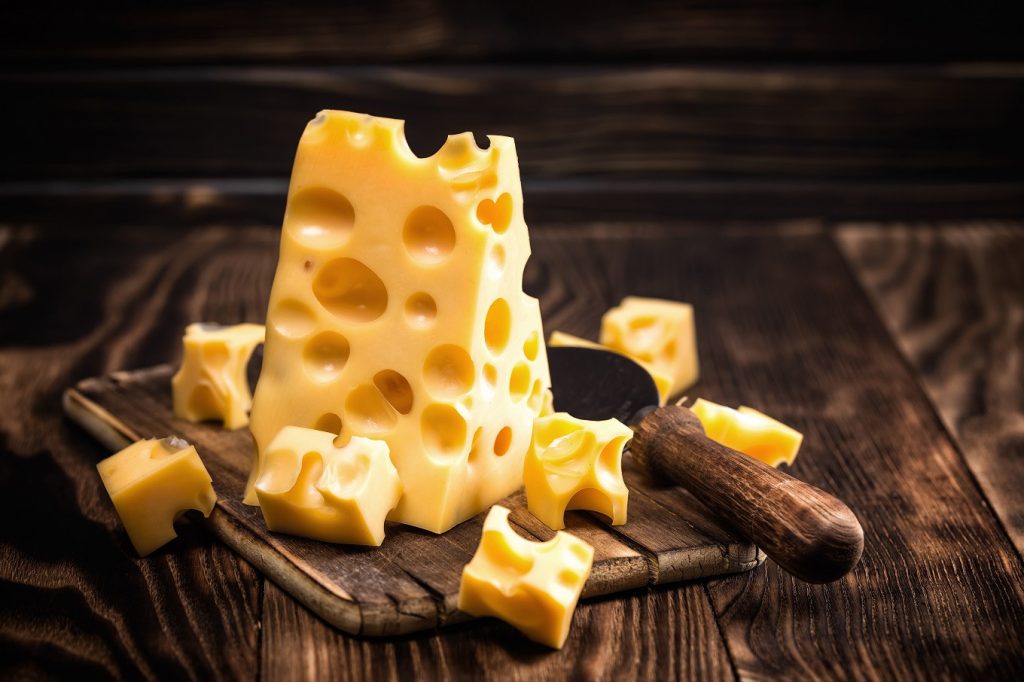
You’ve probably heard of Swiss cheese, cheddar cheese, or pepper jack cheese but have you heard of Groaning cheese? In medieval England, mothers-to-be made what they called a “moan cheese” which was a large wheel of cheese that matured for nine months as the unborn child grew. When the “time to moan” or the moment of birth came, the whole family would celebrate by eating this cheese until there was nothing left but the outer rind. The newborn would then pass through the scab on the day of baptism to be blessed with a long and prosperous life.
3. Good luck horseshoe

Some people believe that hanging a horseshoe in the bedroom or on a door knob with the ends facing up will bring good luck and keep nightmares away. This belief stems from the fact that a horseshoe has seven holes, which is considered a lucky number. Also the fact that it is made of iron can presumably ward off evil spirits that might haunt you in your dreams.
4. Friday 13
Friday the 13th has been a source of superstition since the 19th century. Although its origin is shrouded in speculation and theories, the impact is quite evident. Many people will intentionally avoid doing something meaningful (such as business meetings, social, banquets, etc.) due to the belief that the day is cursed and a source of bad luck.
5. Curse of the opal stone
If your favorite stone is Opal, you are out of luck … literally since this stone is said to bring bad luck to anyone who wears it. This superstition comes from Sir Walter Scott‘s 1829 best-selling novel Anne of Geierstein. In the novel, Lady Hermione was falsely accused of being a demon due to her sudden death after a drop of holy water accidentally falls on her opal jewelry and changes color. This book had such an effect on Opal’s image that shortly after its publication, the Opal market crashed and the price of opals dropped by 50%.
6. Ringing of the bells
Have you ever wondered why bells are always associated with weddings and special occasions? Apparently, the association stems from the widespread belief that bells scare away evil spirits. This belief originated during the reign of Queen Elizabeth for two reasons; ask for prayers for the dead soul and drive away the evil spirits that stood at the foot of the bed.
7. Bird poop equals wealth
Don’t worry, you read the title right. In Russia, there is a belief that if a bird defecates on you, your car or your property it is a sign of good luck and can bring you riches. The more the birds are involved, the richer you will be! So the next time a bird poops you, count all the joy.
8. Old, new, borrowed, blue
This popular wedding tradition is said to have originated during the Victorian era and involves giving the bride various gifts. One of the gifts is something old and represents continuity; another is new and represents hope and the future; the third is borrowed and symbolizes borrowed happiness while the last is blue and is supposed to carry purity, love and fidelity.
9. Black cats, bad luck
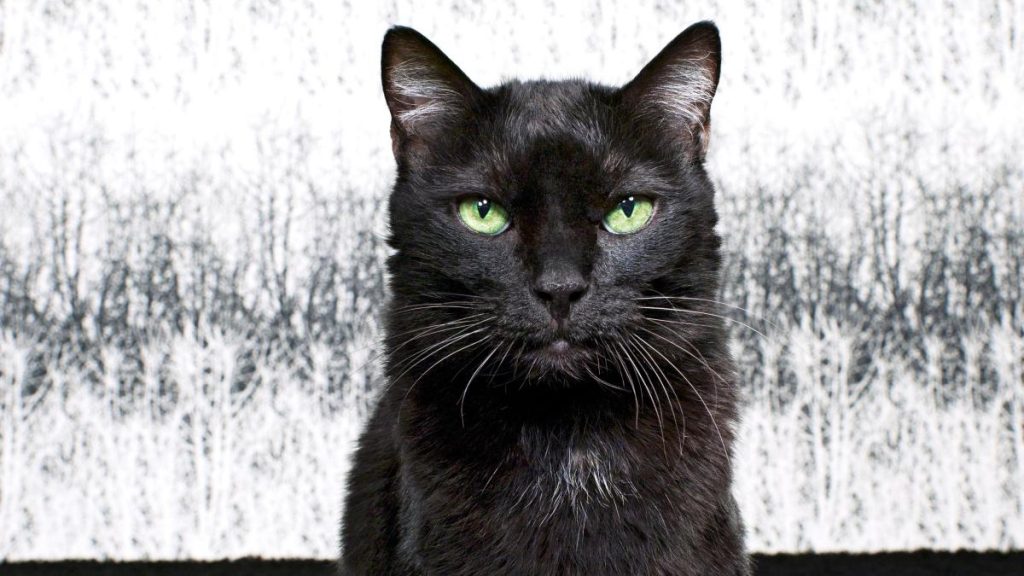
Most people have heard that if a black cat crosses your path it is bad luck (if you are not well now you are). This interesting superstition has its origin in the medieval times. Single women (usually elderly) who associated with many cats where they were believed to be witches who could become cats themselves. So a black cat crossing your path could actually be a witch.
10. Triad of unfortunate smokers
From the Crimean War to World War I, it was considered bad luck among soldiers to light three cigarettes with one match. It was theorized that when the third cigarette was lit, a sniper would have time to have the soldier in sight, ready to kill. However, some believe the superstition may have been invented by match mogul Ivar Krueger to boost business.
11. Counting crows
The amount of crows in a murder is believed to have the ability to predict your luck as exemplified by the popular phrase: “Bad One / Two’s Fortune / Three’s Health / Four’s Wealth / Five’s Disease / Six is death. ” More than six still seems to live up to the person whose count.
12. Jinxed birds
The Wryneck or Jinxtorquilla are a breed of birds that can twist their heads very freely. A superstitious belief among locals is that if this bird turns its head towards you, death is on the horizon.
13. Soul that captures mirrors

Most people use mirrors on a daily basis, which means that, according to this superstition, most people are soulless. There is a superstition that looking in a mirror steals your soul. This helps explain why the evil queen uses a mirror to harm Snow White, why Narcissus was trapped by her reflection, and why soulless vampires have no reflection. Think twice before looking in the bathroom mirror … you have been warned.
14. We cross our fingers for luck
Fingers crossed is a commonly used hand gesture to get lucky. Which makes sense since it was used during the ancient Christian persecution by believers to identify other believers as a sign of peace. Today, however, this has evolved to justify the telling of white lies which may have its roots in the belief that the power of the Christian cross can save a person from being sent to hell for lying.
15. Cage of the photographic soul
When photography was first invented in the early 19th century, people all over the world held the groundless belief that someone’s image was akin to taking their soul. So if an enemy was able to get a photograph of you, they not only held your soul but also had a spiritual power over you. Thank God this is just a superstition, I can only imagine how many people would have power over me.
16. Unfortunate number 13
Not to be confused with Friday the 13th (which is a real day superstition) but similar in nature, this superstition simply states that the number 13 is associated with bad luck. That is why many architects have refused (some still do) to design stairs that ended with 13 steps or buildings that ended with a 13th floor. The fear of the number 13 is so real to many people, that a real phobia has been created to describe it; it is called Triskaidekaphobia.
17. When you wish on a star
The superstition involving wishing on the first star seen in the evening is somewhat uncertain. Some Europeans believed that the gods would occasionally peek and when they moved across the sky, a star would escape and fall. The Greeks also believed that stars fell into human souls and was lucky to make a wish on them.
18. Open an umbrella indoors

According to superstition, if you open an umbrella indoors, you are literally asking bad luck to “rain on you”. One explanation comes from the days when umbrellas were used as sun protection; opening one inside was an insult to the sun god who then cursed you with a curse. Another theory states that an umbrella protects you against the storms of life, so opening one in your home insults the guardian spirits of your home (which also protects you from the storms of life), causing them to be left unprotected.
19. New broom, new house, bad luck
There are a lot of superstitions associated with brooms (heck, it might be a list all in and of itself) but there’s one very curious and peculiar superstition we want to be wary of. As tradition goes, you can’t sweep the dirt out of a new house (or apartment) with a new broom unless you’re going to sweep something off at first. If you don’t sweep something first, then you wipe out your good luck. Don’t blow your good luck away!
20. Lucky rabbit foot
Having this token is unfortunate for the rabbit but a magnet of luck for the wearer. According to superstition (which can be traced as far back as the 7th century BC) the rabbit’s supernatural luck could be exploited by taking the left foot of a rabbit that was shot (or captured) in a creepy graveyard on a full moon. I still can’t see how lucky this is for the rabbit).
21. Touching iron
The superstition of Knocking on wood, or simply “knock on wood” after making a declaration of hope, is a consequence of the idea that you are tempting fate by recognizing your luck. It is possible that the expression comes from an ancient belief that good spirits lived in trees, therefore by knocking on something wooden, a person was asking for protection from the spirits. Another reason why we should all be Christmas trees.
22. Break a mirror
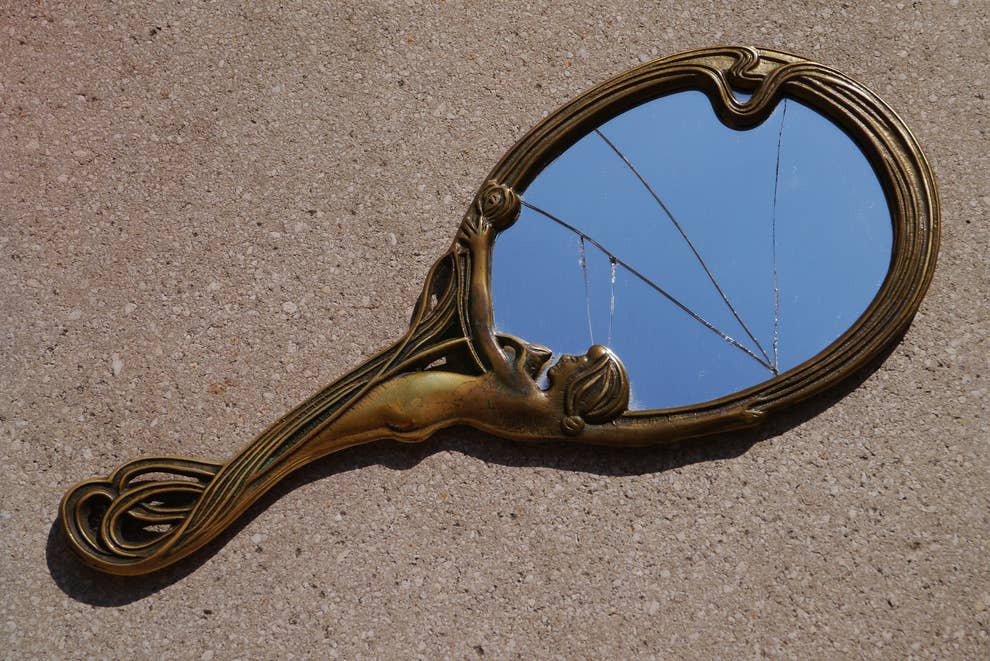
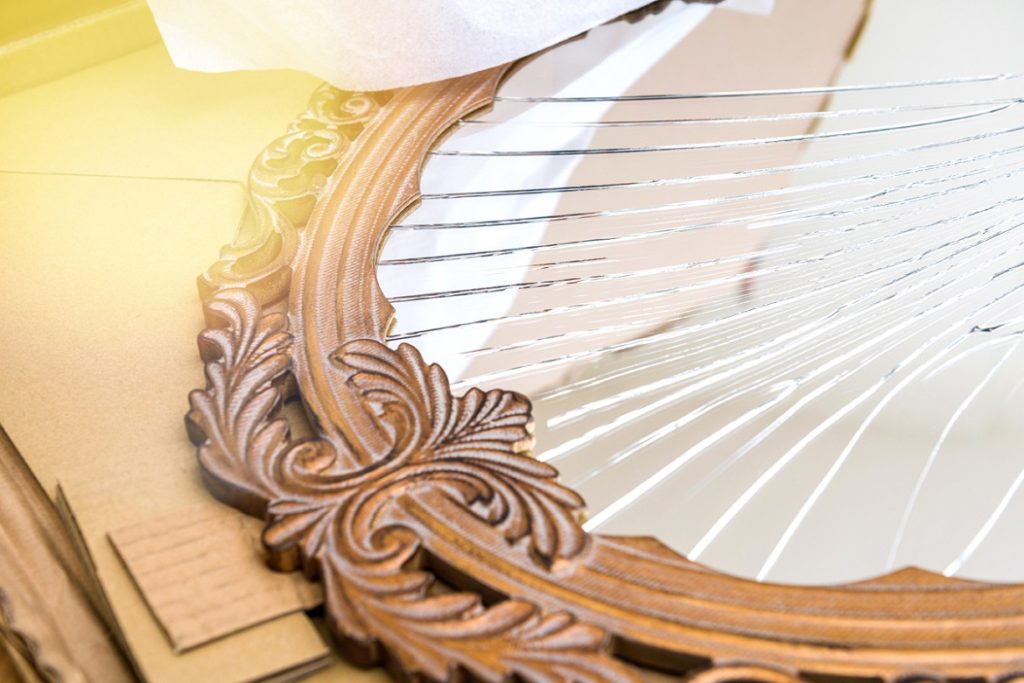
We’ve already mentioned how mirrors are believed to be souls sucking mystical objects (which is bad enough) but what happens when you break these devices? Why, seven years of bad luck of course! Some superstitious sources claim that trapped souls negatively affect your luck. And here you thought you’d do them a favor! No. Make sure those suckers stay inside the mirror!
23. “God bless you”
For many; saying “God bless you” after someone sneezes is a courtesy gesture. However, the origin of this interesting superstition has somewhat doubled. On the one hand, the phrase is believed to have originated from Pope Gregory the Great. He said “God bless you” to people who sneezed during the bubonic plague in the hope that prayer would keep them safe. However, another possible origin stems from the ancient belief that the soul escapes the body during a sneeze, unless God prevents it with a blessing.
24. Four-leaf clover
Although the origin of desire on a four-leaf clover has been lost in antiquity, it has long been a symbol of good luck and fortune. It has also been used in some traditions to find a husband or wife. The way it works (for you single) is by first finding a four leaf clover (good luck with that), if you find one, then you have to eat it (or put it inside your shoe … but eating it is more fun). After this, the powers of luck are activated and the first person you make contact after activation will be your future mate … (Word of warning, stay away from anyone you don’t want as a future mate).
25. Itching of the palms
There seem to be many variations on this superstition, but the idea of having an itchy heartbeat generally refers to someone who is greedy or has an insatiable desire for money. Some people believe that if your right palm itches, you will lose money, while an itchy left palm means money is on its way. If both throbs itch … you may want to go to a doctor for that.
26. Salty love

In most European countries, beliefs related to salt are ominous. In Russia, on the other hand, salt is linked to love and marriage. It is said that too salty dishes are an indication of a preparation by a woman in love. According to tradition, the new brides had to salt their father-in-law’s dish: consequently, in order not to seem little in love with the new husband, they added more salt than they should.
27. Beware of henna and snakes
What may seem like a harmless beauty ingredient, for healthy hair and avoid boldness, may actually be a source of curses and ominous omens: dyeing your hair with henna in Indiait’s riskier than we might think. In fact, when a woman dyes her hair with henna, she cannot leave the house when darkness falls because she thinks it could attract evil spirits. To avoid this unpleasant inconvenience, you need to sprinkle your head with poppy seeds that keep spirits away. Furthermore, pregnant women cannot look snakes in the eye: they would petrify them with their gaze, and this would produce negative karma, even for the unborn child. Finally, to ward off the evil eye towards newborns, mothers paint their faces with black kajal on the cheeks and around the eyes.
28. Superstitions in the theater
The world of theater has always been – and at every latitude – a basin of numerous superstitions. I grew up knowing that when I went to the theater, I didn’t have to wear purple (and as surprising as it may seem, I often wear purple): purple is the color of Lent and in the Middle Ages all performances were banned during this period, so this color “brings bad” to the theater. The most superstitious actors would be able to cancel a show if they spot a purple stole in the audience.
29. The forts of the Fairies
The emerald land is full of legends and myths concerning leprechauns, elves, and fairies. The latter do not look like the good fairies from Disney movies, but they are irritable and mischievous creatures, and for this reason it is better not to touch the Fairy Forts. The Fairy Forts are circular constructions in the grass that the first inhabitants of Ireland believed were the dwellings of the fairies: superstition has it that anyone who touches the Fairy Forts, or cuts the hawthorns that grow on them, will be cursed with the certainty of a terrible death. In support of this thesis, many folk tales tell of accidents (such as sepsis in the limbs, fulminant diseases and other nice things of this kind) that occurred to those who tried to touch the Fairy Forts.
30. The evil eye
Beware of giving compliments when you are in Greece! Compliments are said to attract envy and consequently the evil eye. For this reason, in Greek cities and islands, it is customary to put a blue painted glass eye on the door jamb, and it is common to see it on people as an accessory (it is often found as a pendant for bracelets and necklaces). Another way to ward off the evil eye is garlic, which is hung around the house or eaten. A great excuse to feast on tzatziki.
Popular superstitions and their origins
Below, we trace the origins of popular superstitions. Why is it said that a black cat crossing the road brings bad luck? And why would it be better not to go under a ladder? The superstitious rites are born as popular legends or, more often, they draw on episodes and facts of the daily life of the past. Are you curious?
The broken mirror
In the history of many cultures, the mirror is considered a magical object due to its intrinsic property of “duplicating” what is reflected in it, and it’s used in many movies as an element of horror. The Romans, for example, believed that through the mirrors it was possible to observe what was happening far away, at the most remote borders of the Empire.
The first “modern” mirror was produced in Murano in the 14th century. Some time ago, perfectly polished metal or bronze plates were used; more simply, one could resort to the surface of the water. The very first Venetian mirrors were very expensive and for a long time they were only within the reach of the middle and upper classes. To prevent clumsy servants from ruining these precious luxury goods and thus reducing them to a thousand pieces, the hosts spread the rumor among the servants that breaking a mirror would lead to misfortune and misfortune. More precisely, bad luck for 7 years. And why exactly seven? In Roman culture the thought was widespread that the cycle of human life was renewed precisely every seven years.
The black cat
It is said that when a black cat we cross the street, you should take three steps backward before you can continue the journey, or wait for someone else steps that attracts him bad luck. Accustomed to the night life, in many cultures the domestic cat has often been pointed out as a faithful companion of the devil and, more generally, of dark entities. In 1233 Pope Gregory IX even issued a bull with which he authorized the extermination of these animals.
At the basis of popular belief there is a secular explanation: black cats, at night, blended perfectly with the darkness (thanks to a poor lighting system) and it was not uncommon for their yellow eyes to frighten passing horses! Coachmen and riders therefore promptly misled if they noticed the cat, or cursed it with acquaintances when they could not avoid the accident.
The ladder

At least once in their life it happens to everyone to get around a ladder leaning against a wall.” I don’t believe it, but you never know.” The superstition has medieval origins and has two versions, one religious and one secular. A staircase leaning against a wall forms a triangle which, in the Christian faith, represents the holy and inviolable Trinity. For many superstitious people, going under it is considered an affront to the Father, the Son and the Holy Spirit. But the ladder is a symbol that also recurs in other ancient cultures! For the Egyptians, for example, the god Orusthrough, he led the dead on high, towards the eternal light. The staircase represented for this people the closure of a life cycle. According to the words of Muhammad, then, the souls of the dead are destined to reach Allah by walking up a staircase.
Touch iron
But will we have to protect ourselves from bad luck? According to an ancient popular belief, to ward off the lurking misfortune it would be enough to touch iron. Better yet, a horseshoe. Legend has it that one day the devil himself appeared at the door of an English saint, San Dunstiano, and asked the pious man to shoe a horse for him. Cunningly, the saint instead managed to shoe the satanasso’s hooves to the floor.
In exchange for his freedom, Saint Dunsten made him promise that he would not cross the threshold of any house on which a horseshoe had been exposed. This object, and by extension the material it is made of, have become popular symbols of protection against the devil and misfortune. In the countries of the north, on the other hand, it is good to “touch wood” because of the good spirits who, according to mythology and fairy tales, would inhabit some particular trees.
Look into each other’s eyes during a toast
The idea that not looking into each other’s eyes during a toast in company brings bad luck stems from an ancient trick between diners. During banquets, in medieval times for the most part, the suspicion that someone could poison the glasses led the guests to carefully scrutinize the neighbors at the table. Cheers!
Do not rest your hat or bag on the bed
How many grandmothers are horrified when you put your hats and handbags on the bed? This gesture evokes bad thoughts. Doctors and priests who, called urgently, came to the bedside of the dying and the sick often left their bag and hat on the patient’s bed in the rush of the moment. It is therefore an image that mends bad moments. An episode of everyday life has turned into a symbol of bad luck for the occupant of the offending bed.
Open the umbrella indoors
In ancient Rome this object was used to shelter both from the rest and from the sun. In particular, at the time it was thought that those who opened an umbrella at home did not demonstrate sufficient respect to the sun god. However, the superstition of the open umbrella at home has two other possible interpretations that are closer to our time. According to the first, the idea of opening an umbrella in an intimate place, and where there is no need to do so, recalls the canopy held high over the head of the priest who brought extreme unction to the dead. Then there are those who trace the superstition back to an expedient of the poor classes who, to repair leaks or broken windows, struggled with umbrellas of all colors and sizes. Opening them in the house, therefore, would lead to financial waste for the tenants.
Never put bread upside down on the table!
My father punctually takes me back if unfortunately, cutting the bread, I leave it upside down on the table for more than a microsecond. For the Church, food symbolizes Christian aggregation: it is therefore disrespectful, for those who believe, to place it on the table upside down. Regarding this widespread popular superstition, there is also a historical legend that revolves around the figure of the executioner.
Executioners are often portrayed as being cruel and violent and frightening. In reality, these executioners were marginalized by society and were mocked by the people at the earliest opportunity. The bakers, for one thing, handed them the bread upside down every day as a symbol of contempt. It is said that the last executioner of the city of Turin, Piero Pantoni , fed up with the joke of bad taste, managed to obtain from the authorities the order that the bakers, by law, would offer everyone the bread “in reverse”. Cunning bakers, therefore, circumvented the prescription by inventing the pan trunk, which has almost the shape of a beveled brick, of which it is difficult to distinguish the top and the bottom.
Spill the salt
Many ancient peoples considered salt – a precious element to preserve foodstuffs subject to rapid deterioration for a long time – a sacrosanct and magical ingredient. The Romans, for example, used it during sacred rituals and portioned it to pay the soldiers.
They also used to sprinkle it, for custom, on the ruins of the destroyed cities because they did not want to bend to the will of the Empire. Salt, in fact, damages the fertility of the soil and prevents its prosperity. When it is accidentally overturned, it is therefore thought that it attracts poverty and misery. In the long run, the thought has taken root among the faithful of the Christian religion that misfortune attracts the devil on the shoulder of those who overthrow the salt: it would be good, therefore, to collect the salt from the ground and throw it behind (preferably on the left) three pinch.
“Raise your feet I’m passing the broom, otherwise you won’t get married”
Phrase popular with mothers – and dads, why not – during household chores. For girls “to be married” the broom passed on the feet would be bad. Originally, the idea that a woman who inadvertently performs this gesture proves to be unsuitable because she is poor in chores.
The superstition of the number 13
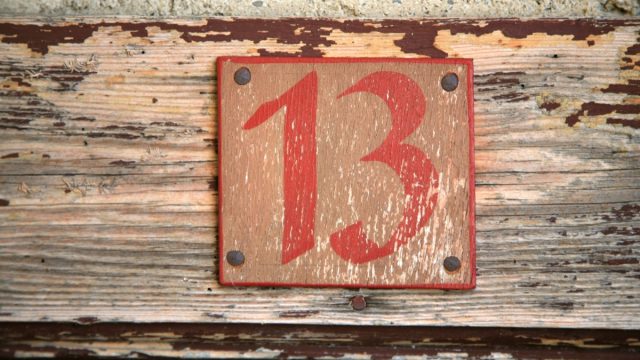
It goes without saying that in other parts of the world this number brings good! In America, for example, the figure mends the first 13 founding colonies of the nation (for this reason on the back of the one dollar bill the pyramid depicted has thirteen steps and the eagle, symbol of the USA, holds thirteen arrows and a branch in its claws. olive tree with thirteen small leaves).
Elsewhere, however, thirteen sitting at the table is unlucky – the idea behind which lies the Christian episode of the Last Supper, with the designation of Judas as the thirteenth diner – and especially when the calendar 13 falls on Friday, the day where Jesus Christ would be crucified.
But when they ask me why 13 brings bad luck, I prefer to resort to a decidedly more profane explanation. According to an ancient Norse legend, Odin organized a banquet for twelve deities in Valhalla. Loki, the god of great cunning and deceptions, stumbled upon it as thirteenth at the table, sowing discord among the diners and enjoying what he managed to unleash. A violent fight between the diners in fact caused the death of one of the gods.
Origins of superstitions
Even today, superstition and the fear of being hit by bad luck mean that many people avoid going under a staircase, opening an umbrella at home or traveling by plane on Friday thirteenth. On the other hand, these same people will cross their fingers or touch iron in hopes of warding off bad luck. Since superstitions have their roots in the irrational, they should have disappeared with the spread of education and the advent of science. Yet even today, despite the high regard for objective evidence, most people, when questioned, will admit to believing in at least a couple of superstitions.
Superstitions are part of the ancient heritage of humanity. According to archaeologists, it was Neanderthal man who created the first superstitious (and spiritual) belief, namely survival in the afterlife. While previously Homo sapiens abandoned the dead, Neanderthals buried the dead in funeral rites, and placed food, weapons, and coal next to the body for use in the future life.
It is hardly surprising to see that superstition and the birth of spirituality have developed hand in hand. Throughout history, what was superstition for one person was often religion for another. The Christian emperor Constantine considered paganism superstition, while the pagan statesman Tacitus called Christianity a dangerous and irrational belief. Protestants considered the veneration of saints and relics by Catholics superstitious, while Christians viewed Hindu rites in the same way. For an atheist, all religious beliefs are superstition.
Superstitions arise in a simple way. Primitive man, in search of answers to phenomena such as lightning, thunder, eclipses, birth and death, not knowing the laws of nature, began to believe in the existence of invisible spirits. He noticed that animals had a sixth sense in the face of danger and imagined that spirits were warning them. And the miracle of a tree that sprouted from a seed, or of a frog that was born from a tadpole, suggested the existence of an otherworldly intervention.
Since his daily life was fraught with adversity, he deduced that the world was mostly populated by vengeful rather than beneficial spirits. Therefore, most of the religious beliefs that have come down to us include many ways to protect us from misfortune.
To protect himself in what appeared to be a confusing world, the ancient man adopted a rabbit’s foot, the toss of a coin and a four-leaf clover. It was an attempt to impose human will on chaos. And when one amulet was not effective, he tried another and another. In this way, thousands of common objects, expressions and formulas took on magical significance.
In a sense, even today we do the same. A student writes with a specific pen a theme that earns him a good grade, and here that pen becomes “lucky”, and in this sense we can give many examples. We are the ones who make the normal extraordinary. To tell the truth, there are very few objects that surround us, which, in one culture or another, have not been attributed with meanings linked to superstition: mistletoe, garlic, horseshoes, umbrellas, crossed fingers. And they are just a few.
Even if by now many phenomena that were once considered mysterious have been scientifically explained, everyday life still presents enough unknowns to make sure that, especially in the most unfortunate moments, we resort to superstition, so that it explains what otherwise would be inexplicable and imposes on contingent events the strength of our desires. So, let’s cross our fingers, touch iron, and wish each other the best of luck in listing the ancient origins of many of our most widespread irrational beliefs.