
Diana Spencer, known as Diana Spencer, commonly known as Lady Diana or “Lady Di”, was Princess of Wales from 1981 to 1996. Born in Sandringham, Norfolk, she is the daughter of Viscount Edward Spencer. Shy child, having suffered from her parents’ divorce, she lives in the shadow of her older sisters.
She married in 1981 the heir to the British throne Charles, Prince of Wales, with whom she had two children: William, in 1982, and Henry, known as “Harry”, in 1984. She quickly gained great popularity and became a figure global humanitarian cause: it creates and engages in several associations to defend causes such as the defense of children, the fight against AIDS, anti-personnel mines and cancer. Nicknamed “the princess of hearts” or “the people’s princess”, she became the most publicized royal personality with her stepmother Elisabeth II as well as one of the most famous women in the world at the end of the XXth century.
The revelation, in the 1990s, of her marital misfortune with Prince Charles and her isolation within the royal family, for a time degraded the image of the latter and strengthened public support for Princess. The princely couple separated in 1992, and the divorce was formally registered in 1996.
Table of Contents
Childhood
Issue of the Spencer family, a famous lineage of the British aristocracy whose origins date back to the xv th century, Diana Frances Spencer was the youngest daughter of Edward Spencer (1924 – 1992), Viscount Althorp (later 8th Earl Spencer) and by his first wife, Frances Burke-Roche (1936 – 2004).
The viscountess belonged to the younger branch of a family of Irish peers who had emigrated to the United States in 1879 and who had American citizenship (citizenship abandoned when the title of Baron Fermoy was changed in September 1920). The paternal grandmother of the latter, Frances Ellen Work (in), was an American heiress, a native of the city of New York.
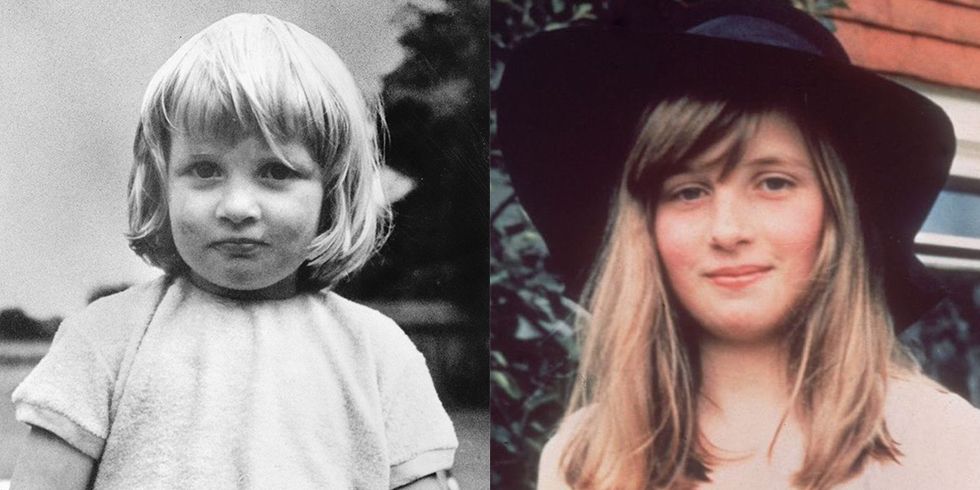
Diana Spencer was, through her father, a distant descendant of Charles II of England (in illegitimate descent) and, through him, of Henry IV, King of France, of Saint Louis and of Hugues Capet. She is also descended from Georgiana Cavendish, Duchess of Devonshire, Charles Gray, British Prime Minister, and is the great-grand-niece of Catholic cleric Georges Spencer.
Moreover, Diana and Sarah Ferguson, her friend and future sister-in-law, were also distant relatives, since Sarah was also a descendant of Georgiana Cavendish (née Spencer), through the latter’s illegitimate daughter, Eliza Courtney. Diana helps bring Sarah closer to Prince Andrew of the United Kingdom, her brother-in-law, who will marry in 1986. This union will also end in a divorce, but, unlike the Princes of Wales, the couple will remain on good terms. Diana’s parents were also divorced; this heated separation caused by the viscountess’s adulterous relationship with the heir to a fortune in the wallpaper industry, Peter Shand Kydd, had made the girl the stake of a lawsuit which her mother brought to her ex-husband to obtain the custody of Diana and her brother.
Education and professional career
Diana made a course of poorer: after studying at Riddlesworth Hall in Norfolk and at West Heath Girls’ School in Kent, she joined in 1977 the Institut Alpin Videmanette, an institution for young girls of good family Rougemont, Switzerland. Artistic and very sporty sensibility, she dreams of becoming a ballet dancer. In 1978, she returned to London, and began a series of odd jobs. She finally found a job as a nanny in an American family and, in the fall of 1979, worked as an assistant in a kindergarten, the Young England of Pimlico. It was during this time that she was spotted by the royal family, with the Queen considering her gentleness, modesty and discretion make her an ideal personality for the role of Princess of Wales.
The wedding with Charles
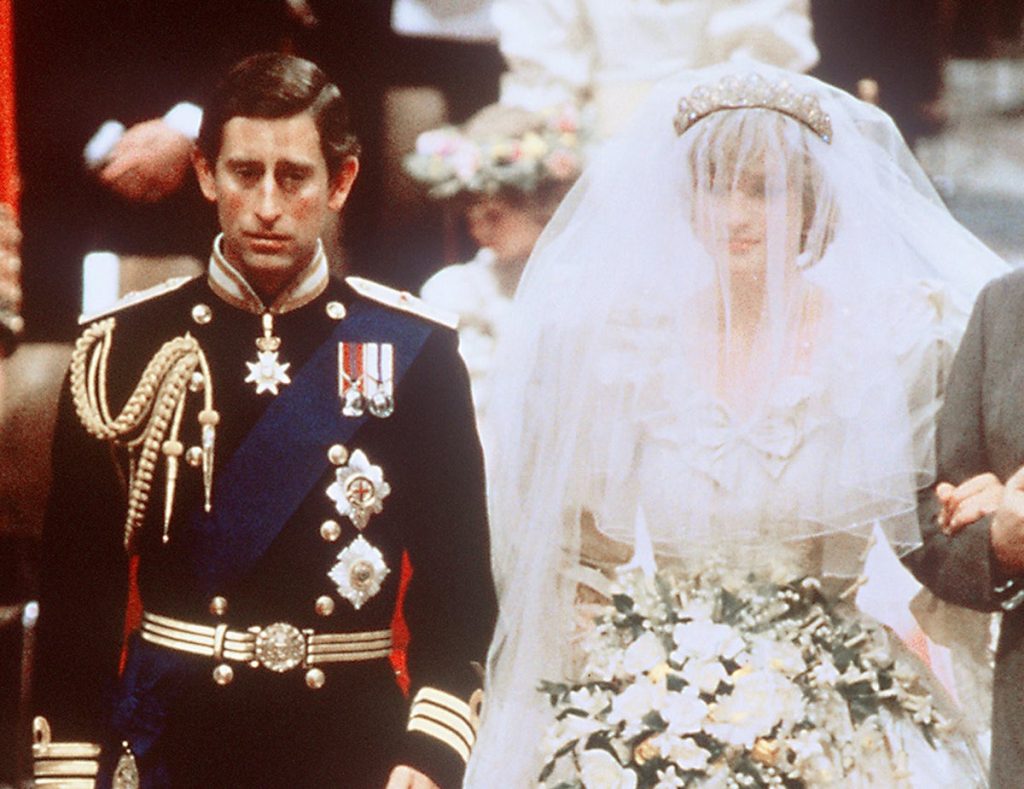
The wedding was a worldwide event followed by over 750 million viewers around the world, while 600,000 people flooded the streets of London to see the bride on the way to the cathedral. The very long white veil on the red carpet of the main span of St. Paul’s Cathedral is an image that has remained indelible in the collective imagination. Lady Diana wore an ivory-colored taffeta and silk dress, adorned with antique lace and with a train seven meters long which inspired the most iconic looks in the movie Crown. At the altar, the young woman mistakenly reversed the first two names of Carlo, pronouncing “Filippo Carlo” instead of “Carlo Filippo”, and did not express a vow of obedience to her husband, a choice desired by both.
Life at court
32 years for him, just 20 for her. The story of the simple and beautiful kindergarten teacher who could have become queen became a modern fairy tale. Two sons arrived, William and Henry. Photographers followed the royal couple everywhere. Every dress, every gesture, every smile of Princess Diana was analyzed and made the front page. But things soon took a different turn. The wind brought back to court by Diana broke against the rigidity of the royal family and against the “ghost” of another woman “, Camilla Parker Bowles, Carlo’s childhood love, never forgotten by him. The golden palace became well soon to be a prison. The days of what would soon become simply Lady D dragged on between official ceremonies, corporate travel, and royal pressure.
Diana became the “sad princess”. He continued to engage in his philanthropic activities. A photo of her with a little AIDS patient in her arms went around the world as well as the one that portrayed her among the leprosy patients and that of her meeting with Mother Teresa of Calcutta who became her spiritual guide. Wherever she went, people flocked to see her up close, offer her a bouquet of flowers, shout her name. A popularity not well tolerated by the members of the Royal House.
The sons William and Harry
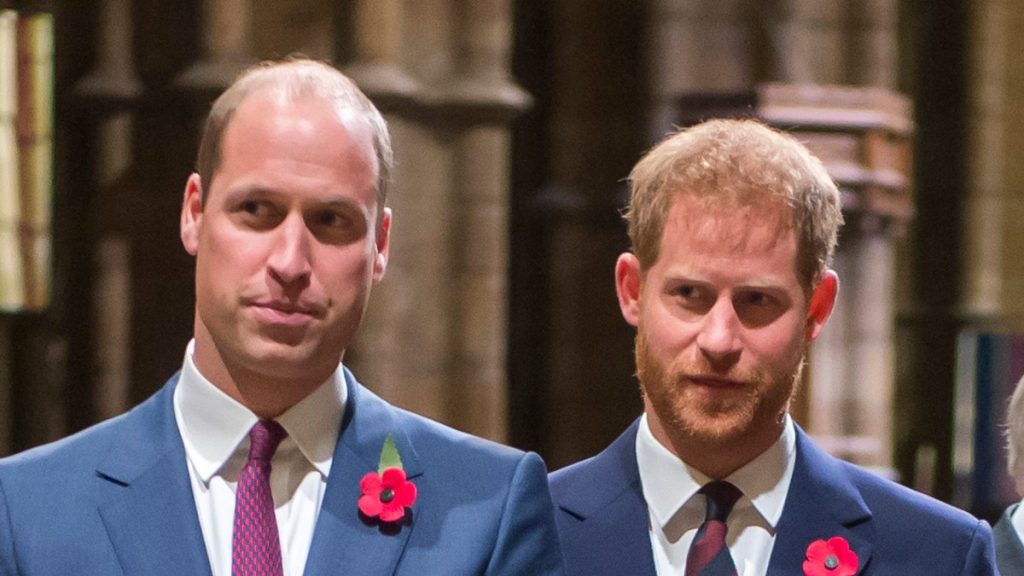
On June 21, 1982, in a private wing of St Mary’s Hospital, in Paddington, London, Diana gave birth to the heir to the throne, William Arthur Philip Louis. The baby, baptized in the music room of Buckingham Palace on 4 August, was the first heir to be born in a public hospital instead of a palace, as was tradition and as the Royal Family also claimed, but Diana was adamant about it. In March 1983, despite the palace having again advised against it, the princess decided to take little William, just 9 months old, with her on the official tour of Australia and New Zealand.
A decision suggested, as she herself admitted, by Australian Prime Minister Malcolm Fraser, who met with public approval. In the same hospital on July 22, 2013, Prince George was born, son of William, third in the line of succession to the British throne and who would be the first grandson of Lady D. The second child, Harry Charles Albert David, was born two years after William, on September 15, 1984. The princess revealed that during the second pregnancy she and Charles were very close.
Diana knew she was expecting a boy since the ultrasound, but she didn’t talk to anyone, not even her husband, who was hoping for a girl instead. Among the many “paparazzi”, the ones that best tell the princess are the shots that portray her in the company of her children. Diana was the mother who participated in school competitions, barefoot, with a red face from the effort and the famous ruffled helmet, and who accompanied the children to the amusement parks and the sea, who scolded and consoled, who laughed out loud in spite of the ‘label. And this was her face most loved by her subjects.
On 9 December 1992, British Prime Minister John Major announced in the House of Commons that the Prince and Princess of Wales had mutually agreed to separate, stating that the Princes of Wales would not divorce, that she would become queen anyway and that they would simply have lived divided and with different commitments. The story was over and it didn’t take long for the subjects to realize it. Carlo granted a television interview in which he confessed the relationship with Camilla Parker-Bowles, which began – he said – after the end of his marriage with Diana. The same day she went to the Vanity Fair party with what went down in history as the very short black “Revenge dress“. The minidress, with a sweetheart neckline, bare shoulders and an asymmetrical hem, had been in her “closet” for three years but the princess had always considered it “too bold”. In 1995, before announcing her retirement from the public arena, Diana granted an interview in which she spoke of her marriage which “was a little too crowded.”
The divorce was made official on August 28, 1996, but the final word on the British monarchy’s most media relationship was, just a year later, the dramatic car accident of August 1997, in which Lady D lost her life next door. to his companion at the time, the billionaire Dodi Al-Fayed, under the Pont de l’Alma tunnel in Paris.
The tragic disappearance
On the evening of August 30, 1997, the Mercedes in which the princess and Al-Fayed were traveling, driven by the driver Henri Paul, crashed into the thirteenth pillar of the gallery, trying to escape the photographers. In the crash, Dodi Al-Fayed and driver Henri Paul died instantly. Trevor Rees-Jones, bodyguard, sitting in the front seat and the only one with his seat belt fastened, was seriously injured. Lady D, freed from the tangle of metal sheets, was still alive and after the first aid given by Doctor Maillez, by chance on the spot, she was transported by an ambulance to the Pitié-Salpêtrière hospital, where she arrived at about 2 am. Due to severe internal injuries, she was pronounced dead two hours later.
The press conference for the official announcement of the death was given at 5.30 am by a hospital doctor, Interior Minister Jean-Pierre Chevènement and Michael Jay, UK ambassador to France. At around 2 pm, Prince Charles and Diana’s two sisters, Lady Sarah McCorquodale and Lady Jane Fellowes, arrived in Paris for identification and left with the Princess’s body 90 minutes later. What happened on that tragic Parisian night was under investigation for months. At the end of the investigative activity it was concluded that the driver Paul was drunk and, to sow some paparazzi, he skidded the car causing the fatal impact. This conclusion never convinced Dodi al-Fayed’s father, Mohamed, who has always accused British intelligence of being involved in the story.
The funeral of Lady D
The funeral, followed on TV by two billion viewers, was celebrated on 6 September. Despite the first choice of private funerals, as Diana was no longer a Royal Highness, after the divorce, the sudden and unexpected reaction of the British people, dismayed and in tears at the loss of their beloved princess, prompted the royal house to change idea. To open the funeral procession the very young William and Harry, in front of Buckingham Palace a carpet of flowers that no one dared to remove for days.
The queen agreed to hoist the flag at half mast on the royal palace and immediately returned to London. The day before the funeral he appeared on a live broadcast where he paid homage to his missing daughter-in-law, calling her “an extraordinary human being”, who “in happy moments as in those of despair, had never lost the ability to smile, or to inspire others. with his warmth and his goodness “. Behind Prince Charles and Diana’s children and relatives walked 500 representatives of the organizations sponsored by the princess. Along the streets, over 600,000 people crowded behind the barriers, throwing flowers as the coffin passed and along the entire route. During the ceremony, singer Elton John – her close friend – paid tribute to her by singing a poignant version of “Candle in the Wind”.
A girl from the 80s
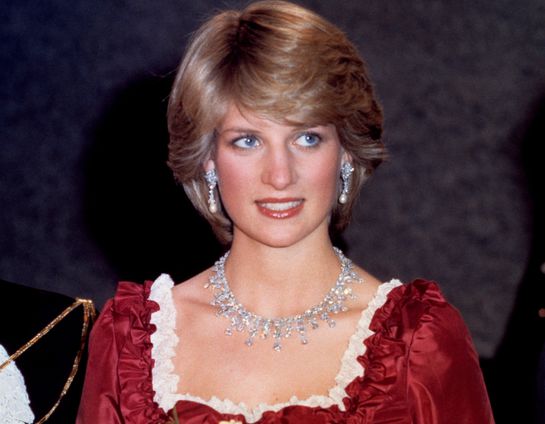
Diana’s disappearance marked the beginning of the decline of the English royal house, not too covertly accused by many of having been somehow directly responsible for her death. In fact, as recent events such as Harry’s “escape” from the palace with his wife Meghan and his “burning” statements in multiple interviews with Oprah Winfrey show, the ghost of Lady D still scares the royal family and is always a sensitive topic. But the story of the “sad princess” who taught the world that fairy tales don’t always end well risks diminishing the power of Diana’s impact on the collective imagination.
Beyond the royal chronicles, Diana was a tireless charity worker, visited sick people all over the world, supported campaigns for the defense of animals, on the prevention of AIDS and against the use of weapons against humanity. She served as godmother and spokesperson for numerous charities working with the homeless, young people, drug addicts and the elderly, as well as being president, since 1989, of the Great Ormond Street Hospital for Children in London. From 1991 to 1996 she was a representative of Headway, an association for the support of victims of brain damage, as well as godmother of the Natural History Museum in London and president of the Royal Academy of Music. In February 1992, the princess visited Mother Teresa’s hospice for the sick and dying in Calcutta, India, and met with each of the 50 near-death patients.
And even in this charitable activity, she was in her own way a “rebel”, in the most traditional of families possible. After all, she always remained, crown or not crown, the same girl from the 80s who loved pop music, who fled from Buckingham Palace with Freddie Mercury disguised as a man so as not to be recognized, who went to the disco with Boy George, who chatted with David Bowie on Live Aid, who went wild in a rousing dance with John Travolta at the White House. So much so that when in the series The Crown was broadcast the episode in which the actress who plays her skates in the corridors of the building, listening with the Walkman Girls on film by Duran Duran, many asked Google: “Did it really happen?” Lady Diana is also an inspiration for many romantic movies made by her life story.
Diana is also loved for becoming an icon, or perhaps she became one almost immediately, since she was introduced to the public as she shyly blushed and the British ran to the hairdresser to imitate her haircut. And it was until the last note of that Candle in the Wind, written for Marylin Monroe and modified for her, which her friend Elton John dedicated to her on the day of farewell. And it still is, thanks to the memory of children William and Harry who, together, will inaugurate a statue dedicated to her, to the mother so much loved and left too soon.
Investigation and controversy
Early reports claim that Diana’s car collided with the pillar at over 190 km / h, and the speedometer needle got stuck on that number. It is then announced that the speed of the car was in fact between 95 and 110 km / h, and that the meter did not have a needle since it was digital (according to the latest investigations, the collision speed was included between 117 and 152 km / h). The car was therefore traveling well beyond the legal limit of 50 km / h and much faster than it would have been prudent in the Alma tunnel. In 1999, an investigation led by the examining magistrate Hervé Stephan entrusted the IRCGN with the technical expertise on the debris found on site and concluded that the Mercedes had struck another automobile (a white Fiat Uno) driving in the same direction in the tunnel. The driver is not identified, and the car was never found.
According to investigators, the collision was caused by the driver who was intoxicated and driving too fast, trying to escape the paparazzi. The conclusions of the French investigation – Henri Paul was drunk – are essentially based on the analysis of blood samples, carried out under the direction of Professor Ivan Ricordel, who established a degree of alcohol three times higher than the legal limit (according to a Ambassador Jay’s report fromseptembre 1997).
On 3 September 1999, the nine photographers and the press biker, indicted for “involuntary homicides and injuries” as well as “non-assistance to people in danger”, benefit from a dismissal from the judges who charge the accident to the driver Henri Paul who was driving under the influence of an alcoholic state, aggravated by the taking of anti-depressants.
Charities
Towards the end of the 1980s, the Princess of Wales showed her support for humanitarian causes such as aid to AIDS victims or the fight against the use of anti-personnel mines. She mainly helps poor children in Africa and stands alongside many personalities such as Nelson Mandela, Mother Teresa and the Dalai Lama.
Media recognition
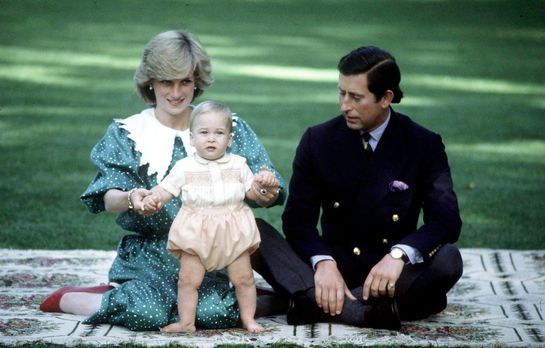
Diana came third among British personalities in a vote under the auspices of the BBC in 2002. In 1986, a cartoon Japanese 23 minutes dedicated to her telling her life until she entered the British Royal Family.
In 2003, the publisher Marvel Comics announced the publication of five volumes entitled Di Another Day (in reference to the James Bond film, Die Another Day ) where Diana, Princess of Wales, is represented as a mutant to superpowers. After a large number of protests, the idea was quickly abandoned. The company Heliograph Incorporated, she has produced a role play futuristic Diana.
After Diana’s death, actor Kevin Costner claimed he negotiated the divorced princess’s participation following The Bodyguard movie that brought Costner and Whitney Houston together. Buckingham Palace categorically denied. In 2006, Stephen Frears dedicated his film, The Queen, to the reactions of Queen Elizabeth II and Prime Minister Tony Blair after Diana’s death.